
Introduction
Cavities remain one of the most common preventable health conditions worldwide, affecting 13.2% of U.S. children aged 5–19 and 25.9% of adults aged 20–44 with untreated decay. Despite this preventability, the sheer number of oral care products lining store shelves creates real confusion about what actually works.
Many consumers unknowingly pick products that offer false protection or actively cause harm — non-fluoride toothpastes that skip remineralization, alcohol-heavy mouthwashes that dry the mouth, or hard-bristled brushes that erode enamel over time.
Effective cavity prevention isn't about buying more products — it's about choosing the right ones. This guide identifies the top dentist-recommended options proven to prevent cavities, explains what to look for on the label, and shows how to build a daily routine that actually protects your teeth.
Key Takeaways
- Fluoride toothpaste (1,000–1,500 ppm) is the most clinically supported cavity prevention product and should form the foundation of any routine
- Electric oscillating-rotating toothbrushes remove plaque 19% more effectively than manual brushes without damaging enamel
- Fluoride mouthwash (0.05% NaF) cuts cavity risk by 27% in high-risk individuals
- Daily interdental cleaning with floss, picks, or water flossers addresses the spaces where cavities commonly develop
- Xylitol products (5–10 g daily) actively inhibit cavity-causing bacteria and complement fluoride protection
Why the Right Oral Care Products Make a Difference
Not all oral care products deliver equal protection. Using the wrong products—non-fluoride toothpaste, alcohol-based mouthwash without fluoride, or hard-bristled brushes—can create a false sense of security while allowing decay to progress or even accelerating enamel damage.
The ADA Seal of Acceptance is the key trust marker for cavity prevention. Products displaying this seal have passed rigorous testing: laboratory validation of fluoride release and enamel absorption, plus two independent clinical trials—each typically spanning two years—confirming both safety and efficacy. For cavity prevention specifically, the ADA requires toothpaste to contain fluoride, the only nonprescription additive proven to prevent dental caries.
The five product categories covered here were chosen against a consistent set of criteria:
- Strength of clinical evidence supporting cavity prevention
- ADA recognition and fluoride content
- Ease of consistent daily use
- Suitability across a broad range of patients
Best Oral Care Products for Cavity Prevention
Each product category below was evaluated using clinical backing, ADA recognition, active ingredient efficacy, and widespread dentist recommendation.
Fluoride Toothpaste
Fluoride toothpaste is the cornerstone of cavity prevention. Fluoride works by remineralizing weakened enamel and inhibiting the acid-producing bacteria responsible for decay. The ADA recommends brushing twice daily for two minutes with fluoride toothpaste—a routine that reduces caries risk by approximately 14%.
Clinical evidence:
- Strongest evidence base for caries reduction across all age groups
- OTC concentrations (1,000–1,500 ppm) are effective for most adults
- Prescription-strength 5,000 ppm formulas available for high-risk patients
- Stannous fluoride variants offer additional antimicrobial benefits, reducing plaque bacteria and gingivitis beyond cavity prevention
| Attribute | Details |
|---|---|
| Key Features | Active ingredient: sodium fluoride or stannous fluoride; concentration 1,000–1,500 ppm (OTC), up to 5,000 ppm (Rx); ADA Seal of Acceptance |
| Best For | General cavity prevention for children and adults; stannous fluoride formulas also address gingivitis |
| Price Range | Colgate Total: $15.98 (5-pack, 6.0 oz tubes); Crest Pro-Health: $4.97–$8.97 (4.8 oz); Sensodyne Pronamel: $5.20–$7.00 (4.0 oz) |
Soft-Bristled Toothbrush (Manual or Electric)
The toothbrush is the delivery vehicle for fluoride and plaque removal. Soft bristles are universally recommended because hard bristles erode enamel and cause gum recession over time. Both manual and electric options are effective when used correctly.
Why dentists recommend it:
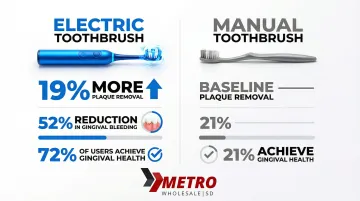
- Electric toothbrushes (oscillating-rotating or sonic) reduce plaque by 19% and gingival bleeding by 52% compared to manual brushing
- Particularly effective for patients with limited dexterity or children
- Built-in two-minute timers on premium models support ADA brushing duration guidelines
- Oscillating-rotating users are 72% more likely to achieve gingival health versus 21% for manual users
| Attribute | Details |
|---|---|
| Key Features | Soft or extra-soft bristles; electric models offer oscillating-rotating or sonic technology; built-in timers on premium models |
| Best For | Manual: general use, travel; Electric: improved plaque removal, dexterity challenges, supervised children |
| Price Range | Oral-B Pro 1000: $49.99; Philips Sonicare ProtectiveClean 4100: $49.96; Philips Sonicare ProtectiveClean 4300: ~$50.00 |
Fluoride Mouthwash
Fluoride mouthwash is an effective adjunct (not replacement) to brushing. It delivers fluoride to hard-to-reach tooth surfaces and is especially beneficial for individuals at elevated cavity risk—those with dry mouth, orthodontic appliances, or a history of frequent cavities.
Key advantages:
- Daily use reduces cavities by 27% in high-risk populations
- Alcohol-free formulas are preferred, as alcohol-based versions can cause astringency and discomfort
- Antiseptic formulas containing essential oils (eucalyptol, menthol, thymol, methyl salicylate) or cetylpyridinium chloride also reduce plaque-forming bacteria
- Standard concentration: 0.05% sodium fluoride for daily use
| Attribute | Details |
|---|---|
| Key Features | Contains sodium fluoride (0.05% for daily use); alcohol-free options preferred; ADA-accepted formulas available |
| Best For | Adults and children at elevated cavity risk; orthodontic patients; those with dry mouth or receding gums |
| Price Range | ACT Anticavity: ~$4.84 (18 oz); Listerine Total Care Zero: $4.90–$8.99 |
Dental Floss and Interdental Cleaners
Cavities frequently form in the spaces between teeth where toothbrush bristles cannot reach. Daily interdental cleaning removes the plaque and food debris that fuel bacterial acid production in these areas. Regular interdental cleaning is associated with lower levels of caries, fewer missing teeth, and reduced periodontitis.
Choosing the right tool:
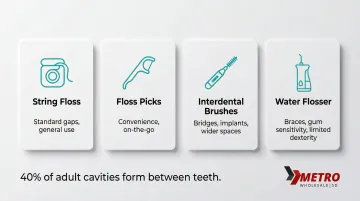
- Traditional string floss, floss picks, interdental brushes, and water flossers all serve the same core function but suit different users
- Water flossers (e.g., Waterpik) are particularly effective for patients with braces, bridges, or gum sensitivity
- Interdental brushes are superior to floss for wider gaps and periodontal disease management
- Interproximal cavities account for roughly 40% of all cavities in adults — making tool selection as important as consistency
| Attribute | Details |
|---|---|
| Key Features | Options include waxed/unwaxed string floss, floss picks, interdental brushes (various sizes), water flossers (pressure-adjustable) |
| Best For | String floss/picks: standard gaps; Interdental brushes: bridges, implants, wider spaces; Water flossers: braces, gum sensitivity, limited dexterity |
| Price Range | Oral-B Glide floss: ~$3.96–$4.97; GUM Soft-Picks: ~$8.69 (80 ct); Waterpik Aquarius: ~$99.99 |
Xylitol-Based Products (Gum, Mints, Toothpaste)
Xylitol is a naturally occurring sugar alcohol with dual cavity-fighting properties. It inhibits the growth of Streptococcus mutans (the primary cavity-causing bacteria) and stimulates saliva production, which neutralizes tooth-damaging acids. Available in sugar-free gum, mints, and some toothpastes.
How it works in practice:
- Most effective when consumed at 5–10 grams daily in multiple small doses throughout the day
- Xylitol gum offers on-the-go cavity prevention between meals when brushing isn't possible
- Disrupts bacterial energy production and stimulates protective saliva flow
- Serves as a proven complement to fluoride products, not a replacement
| Attribute | Details |
|---|---|
| Key Features | Active ingredient: xylitol (look for it as the first sweetener listed); available as gum, mints, lozenges, and toothpaste; no added sugars |
| Best For | On-the-go cavity prevention; after meals; patients who cannot brush immediately after eating |
| Price Range | Spry Xylitol Gum: ~$22.68 (80 ct); Trident Original: ~$14.25 (168 ct); Xylichew: $9.00–$19.00 |
How We Chose These Products
Each product was selected using four criteria:
- Strength of clinical evidence supporting caries prevention
- ADA Seal of Acceptance status
- Active ingredient efficacy — particularly fluoride concentration and xylitol content
- Widespread dentist recommendation across reviewed sources
These criteria also address the most common sourcing pitfalls buyers should watch for when stocking oral care products:
- Prioritizing whitening claims over cavity-prevention formulas
- Stocking alcohol-based mouthwash without verifying fluoride content
- Overlooking interdental cleaning products entirely
- Carrying non-fluoride toothpastes that offer no remineralization benefit
- Offering hard-bristled brushes that risk enamel damage
The products listed above avoid these pitfalls by focusing on clinically validated active ingredients, ADA endorsement, and proven mechanisms of action.
For businesses, dental offices, and retailers sourcing these cavity-prevention staples in volume, working with a trusted wholesale supplier like Metro Wholesale ensures consistent access to quality oral care products at cost-effective pricing. Metro Wholesale carries major brands including Colgate, Crest, Oral-B, and Listerine in bulk case quantities.
Building a Daily Routine Around These Products
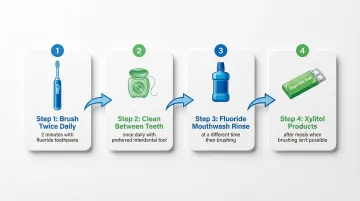
An evidence-based daily routine using the five product categories:
- Brush twice daily for two minutes with fluoride toothpaste using a soft-bristled toothbrush
- Clean between teeth once daily with your preferred interdental tool (floss, picks, or water flosser)
- Rinse with fluoride mouthwash (especially for high-risk individuals) at a different time than brushing
- Use xylitol products after meals when brushing isn't possible
Consistency matters more than product choice. Patients who brush twice daily with fluoride toothpaste and clean between teeth daily significantly reduce their cavity risk — but only when the habits stick.
Regular dental check-ups complement home oral care. Professional cleanings and in-office fluoride treatments address what even the best at-home products cannot. Visit frequency depends on your risk level:
- High-risk patients: every 3–4 months
- Low-risk individuals: annually or as recommended by your dentist
Conclusion
Cavity prevention comes down to a consistent routine built around a small set of well-chosen, evidence-backed products. Fluoride toothpaste and a soft-bristled toothbrush are non-negotiable foundations, with mouthwash, interdental cleaners, and xylitol products adding meaningful layers of protection.
Look for the ADA Seal of Acceptance when evaluating new products and consult your dentist for personalized recommendations, especially if you are at elevated cavity risk. The combination of proper product selection and daily consistency delivers measurable results.
Retail stores looking to keep these essentials in stock can source them through Metro Wholesale, a B2B wholesale distributor carrying cavity-prevention staples from trusted brands including Colgate, Crest, Oral-B, and Listerine — available in case-pack quantities. Contact Metro Wholesale at info@metrowholesalesd.com or +1 619 423 5600 to ask about bulk pricing and current product availability.
Frequently Asked Questions
What is the best product for preventing cavities?
Fluoride toothpaste is the most clinically supported single product for cavity prevention, with the ADA recommending its use twice daily for two minutes. Combining it with an interdental cleaner and fluoride mouthwash provides broader protection across all tooth surfaces.
What is the best oral hygiene routine to prevent cavities?
Brush twice daily for two minutes with fluoride toothpaste, clean between teeth daily with floss or interdental cleaners, use fluoride mouthwash if at higher risk, and visit a dentist regularly for professional cleanings.
What's the best mouthwash to prevent cavities?
ADA-accepted fluoride mouthwashes (0.05% sodium fluoride for daily use) in alcohol-free formulas provide the best cavity protection. Antiseptic options with essential oils or cetylpyridinium chloride also help reduce cavity-causing bacteria while delivering fluoride.
Is fluoride toothpaste necessary for cavity prevention?
Yes. Fluoride toothpaste is the most clinically supported option for cavity prevention, with evidence showing it reduces cavities by approximately 14%. Non-fluoride toothpastes do not provide equivalent protection and are not recommended by the ADA for most patients.
Can xylitol gum really prevent cavities?
Yes, when used correctly. Xylitol inhibits Streptococcus mutans bacteria and stimulates saliva production, both of which reduce cavity risk. However, you need 5–10 grams daily in multiple doses to achieve therapeutic effects, and it serves as a complement to—not a replacement for—fluoride-based products.
How often should I use fluoride mouthwash?
Most ADA-accepted daily fluoride mouthwashes (0.05% sodium fluoride) are designed for once-daily use, typically after brushing. High-risk patients may benefit from twice-daily use as directed by their dentist. Avoid eating or drinking for 30 minutes after rinsing to allow fluoride to absorb into enamel.