
Introduction
Grocery bills keep climbing, and families across the country are looking for smarter ways to stretch their food budgets without sacrificing quality or variety. Bulk shopping has emerged as one of the most effective strategies, with research showing that buying in larger quantities can reduce costs by an average of 27% compared to standard package sizes.
Not all bulk stores deliver the same value. Choosing the wrong one can mean paying for a membership you barely use, buying quantities your family can't finish before expiration, or dealing with a product mix that doesn't match your household's needs.
The best fit depends on your household size, shopping habits, storage capacity, and weekly consumption patterns.
Sorting through the options is where most families get stuck. This guide covers the top grocery stores for bulk shopping, what makes each one stand out, and how to match the right store to your household's budget and lifestyle.
Key Takeaways
- Bulk shopping saves families 27% on average, but the right store depends on household size, location, and buying habits
- Warehouse clubs like Costco, Sam's Club, and BJ's offer deep per-unit savings but require paid memberships
- Aldi provides bulk-friendly pricing with no membership fee, ideal for budget-conscious families
- San Diego-area families can access wholesale-grade pricing through local distributors like Metro Wholesale — no club membership needed
- Match your store to your household: membership value, product range, and pack sizes all factor into real savings
Why Bulk Shopping Makes Sense for Families
The economics of bulk buying work well for families because higher household consumption means larger pack sizes get used before expiration. Research from LendingTree found that bulk buying saves shoppers 27% on average compared to buying standard quantities—a genuine savings opportunity when you're feeding multiple people daily.
Bulk shopping also reduces the time families spend on grocery runs. Fewer trips per month means less time navigating crowded aisles, fewer impulse purchases, and a well-stocked pantry that covers your household's needs for weeks at a time.
Those benefits come with real trade-offs worth thinking through before committing:
Before you stock up, weigh these trade-offs:
- Higher upfront costs per shopping trip require more cash on hand
- Storage space becomes essential—bulk items need room in pantries, freezers, and cabinets
- Waste can erode savings if quantities exceed what your family actually consumes
- Membership fees add to the annual grocery budget
The stores covered below vary significantly in pack sizes, membership requirements, and product range—knowing what to look for makes it easier to find the right fit for your household.
Best Grocery Stores for Bulk Shopping Families
These stores were evaluated based on membership value, product range, family-friendly pack sizes, pricing transparency, and reputation for serving household shoppers. Here's how each one stacks up.
Costco
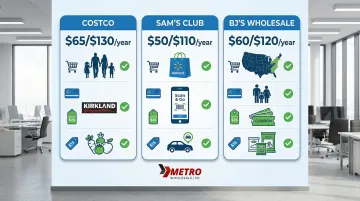
Costco is the largest membership warehouse club in the U.S., with an extensive selection spanning fresh produce, proteins, pantry staples, organic items, and household goods in family-sized quantities. Its private label, Kirkland Signature, delivers quality at lower prices than national brands, and a generous return policy gives families confidence when buying in bulk.
What sets Costco apart for families is its growing selection of organic and specialty items that appeal to health-focused households, plus services like pharmacy, optical, and gas stations that add value beyond groceries.
| Membership Cost | Key Family Product Categories | Best For |
|---|---|---|
| Gold Star: $65/year Executive: $130/year (includes 2% cashback up to $1,250) |
Proteins (chicken, beef, salmon), dairy, organic produce, snacks, cleaning supplies, paper goods, frozen foods | Large families (4+) who shop regularly and can leverage Executive membership cashback |
Sam's Club
Sam's Club is Walmart's warehouse club, offering a similar bulk model to Costco but with a lower membership price point and tight integration with Walmart's supply chain for competitive grocery pricing. The company has recently surged in customer satisfaction rankings, scoring 85 points in the 2025 American Customer Satisfaction Index—higher than Costco's 82.
Key differentiators for busy families:
- Scan & Go app lets you skip checkout lines entirely by scanning items as you shop
- Curbside pickup makes bulk shopping manageable even with young children in tow
- Strong overlap with Walmart's private label brands keeps everyday staple costs low
| Membership Cost | Key Family Product Categories | Best For |
|---|---|---|
| Club: $50/year Plus: $110/year (includes free shipping over $50, free curbside pickup, 2% Sam's Cash back) |
Pantry staples, frozen meals, deli items, breakfast goods, beverages, household supplies, snacks | Families who also shop at Walmart regularly and want app-based bulk shopping convenience |
BJ's Wholesale Club
BJ's operates primarily in the Eastern U.S. and holds a unique advantage among warehouse clubs: it's the only major chain that accepts manufacturer coupons in addition to its own store coupons. This allows budget-focused families to stack savings in ways that Costco and Sam's Club simply don't offer.
Another practical advantage is BJ's smaller pack sizes compared to Costco, making it easier for medium-sized families to avoid waste. The chain also offers more flexible inner-pack quantities and frequent promotional discounts layered on top of already-reduced bulk prices.
| Membership Cost | Key Family Product Categories | Best For |
|---|---|---|
| Club: $60/year Club+: $120/year |
Grocery staples, fresh meats, bakery, seasonal produce, cleaning and paper products, frozen foods | Medium-sized families (3-4 members) in the Eastern U.S. who actively use coupons and prefer slightly smaller bulk quantities |
Aldi
Aldi is a no-membership discount grocery chain that achieves bulk-friendly per-unit pricing through a streamlined private-label model, reduced overhead, and a focused product assortment. Consumer Reports found Aldi's prices to be 8.3% lower than Walmart's, making it a strong option for families who want savings without a membership commitment.
Aldi's "ALDI Finds" weekly specials offer limited-time products at aggressive prices, and the low everyday prices on staples like dairy, produce, and proteins make it ideal for families who shop frequently in moderate quantities rather than one massive haul.
| Membership Cost | Key Family Product Categories | Best For |
|---|---|---|
| None required | Dairy, fresh produce, proteins, canned goods, snacks, frozen foods, seasonal specialty items, pasta, rice | Budget-conscious families who prefer no membership fees and shop more frequently in moderate quantities |
Metro Wholesale
Metro Wholesale is a San Diego-based wholesale supplier serving both businesses and local families. Unlike big-box warehouse clubs, it operates on a direct wholesale sourcing model, which means pricing reflects true case-pack wholesale rates rather than retail bulk markups.
What makes Metro Wholesale compelling for local families:
- Case-pack pricing on name brands like Tide, Clorox, Dove, and Huggies
- Product variety includes specialty items not always found at mainstream warehouse stores
- Membership-based system provides access to true wholesale rates
- Multiple delivery options including next-day and Saturday delivery
- Extensive selection of pantry staples, cleaning supplies, laundry products, beverages, and personal care items
| Contact & Location | Key Product Availability | Best For |
|---|---|---|
| Based in San Diego area Phone: +1 619-423-5600 Email: info@metrowholesalesd.com |
Grocery staples (canned goods, pasta, rice, instant noodles), cleaning supplies (Clorox, Awesome brand), laundry products (Tide, Gain, Foca), beverages (Coca-Cola, Arizona, 7Up), personal care (Dove, Huggies), paper products | San Diego-area families looking for wholesale pricing with a local, trusted supplier and flexible delivery options |
How We Chose the Best Bulk Stores for Families
Not every bulk store is built for household shoppers. Each store on this list was evaluated against criteria that actually matter for families, not businesses:
- Membership cost-to-value ratio — does the annual fee pay for itself?
- Product range for household staples — beyond snacks and paper towels
- Pack sizes suited for family consumption — not just commercial volume
- Pricing transparency — unit pricing that's easy to compare
- Accessibility — physical locations and online ordering options
The most common mistake is defaulting to a well-known name like Costco without checking whether your household size, storage capacity, and shopping frequency actually justify the membership cost or the quantity minimums.
The best store for your family is ultimately the one that aligns with your actual consumption rate. A store with great prices on 50-count items is only a good deal if your family uses all 50 before they expire.
Bulk Shopping Tips for Families to Maximize Savings
Price per unit is your most reliable comparison tool. Divide the total price by the quantity to check whether bulk actually saves you money. Not all bulk prices are automatically lower—savings vary widely by product category, and some "bulk" packages at conventional stores cost more per unit than smaller sizes.
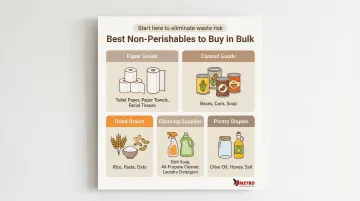
Start with non-perishables before committing to bulk perishables:
- Paper goods (toilet paper, paper towels, napkins)
- Canned goods (beans, tomatoes, soups)
- Dried grains (rice, pasta, oats)
- Cleaning supplies (dish soap, laundry detergent, disinfectants)
- Shelf-stable pantry items (cooking oils, spices, baking supplies)
This approach eliminates waste risk while you build a clear picture of how fast your household actually moves through products. Once you've tracked a few months of consumption, adding bulk proteins, dairy, and produce becomes a much lower-risk move.
That consumption data feeds directly into your next step: building a targeted bulk list.
Identify the 10–15 items your family goes through most consistently, then use that list to compare stores on coverage — not price alone. Most families do better splitting their bulk shopping across two sources:
- A warehouse club membership for high-volume staples (paper goods, cleaning supplies, pantry basics)
- A discount grocer like Aldi or a local wholesaler for everything else
Conclusion
Bulk grocery shopping is one of the most reliable ways for families to reduce food spending. The right store depends on your family's size, habits, and storage capacity. The 27% average savings are real, but they require smart choices about where you shop and what you buy in bulk.
Use this guide as a starting point to compare membership costs against your estimated monthly savings. San Diego-area families can also explore Metro Wholesale, a local wholesale distributor that supplies retailers with bulk consumer goods — from pantry staples to household essentials. To ask about product availability or wholesale pricing, reach them at +1 619-423-5600 or info@metrowholesalesd.com.
Frequently Asked Questions
Is buying in bulk at warehouse stores actually cheaper for families?
Yes, bulk buying typically lowers per-unit costs—some analyses put average savings around 27%, though results vary by store and product category. However, actual savings depend on whether your family consumes items before they expire and whether membership fees are offset by purchase volume.
Do you need a membership to shop at bulk grocery stores?
Major warehouse clubs (Costco, Sam's Club, BJ's) require paid annual memberships ranging from $50 to $130. Stores like Aldi offer bulk-friendly pricing with no membership requirement, and local wholesalers like Metro Wholesale provide wholesale pricing through a free business account signup.
What food items are best to buy in bulk for families?
Non-perishables like rice, pasta, canned goods, and dried beans are the safest bulk buys since they have longer shelf lives. Paper and cleaning products, plus shelf-stable proteins like canned tuna and canned chicken, also work well given their long shelf life and consistent household use.
How much can a family realistically save by shopping at bulk stores?
Families who shop bulk regularly commonly report saving $25 to $50 per month—roughly $300 to $600 per year. Actual results vary based on family size and which products are purchased in bulk.
What should families watch out for to avoid wasting money when bulk shopping?
Avoid bulk-buying perishables you don't consume quickly, always compare price-per-unit (not just sticker price), and account for storage space before committing to large quantities. The upfront savings disappear if food spoils before you use it.
Is a Costco or Sam's Club membership worth it for a family of four?
For a family of four that shops regularly, a warehouse membership typically pays for itself within a few months of grocery purchases on staples alone. Executive or Plus tiers can offer additional cashback that further offsets the annual fee.