Here's the problem most first-time renters face: they either panic-buy a dozen random bottles that don't work together, or they grab dish soap and paper towels and call it done. The first approach leaves you with a cluttered cabinet full of overlapping products. The second leaves you scrubbing grease with hand soap, wondering why nothing comes clean. Both cost more time and money than a strategic approach.
This guide cuts through the confusion. You'll learn exactly which cleaning supplies belong in a first-apartment kit, how to organize them by function, and how to stock up affordably without sacrificing quality.
Key Takeaways
- Start with four core solutions: all-purpose cleaner, bathroom disinfectant, kitchen degreaser, and glass cleaner
- Pair solutions with essential tools: vacuum, mop, microfiber cloths, scrub brushes, and rubber gloves
- Choose multi-purpose products to replace single-use sprays and free up cabinet space
- Buy high-consumption items in bulk to cut per-unit costs on everyday essentials
- Use this guide to stock your apartment right the first time — must-haves, nice-to-haves, and buying tips included
Why the Right Cleaning Supplies Matter Before You Unpack
That "new" apartment isn't actually clean. Previous tenants left behind biological residue, construction dust settled during turnover, and storage grime coats surfaces you're about to touch daily. Research shows 84% of US homes contain detectable dust mite allergens, and rental units are no exception.
Cleaning before you unpack prevents cross-contamination. When you wipe down cabinets, counters, and closet shelves first, you're not transferring someone else's grime onto your dishes, clothes, and furniture.
New renters make two common mistakes:
- Buying too many specialized sprays for counters, appliances, cabinets, and walls — when one all-purpose cleaner handles all four
- Relying on dish soap for every surface, which fails against bathroom bacteria and baked-on kitchen grease
Both waste money and add time to every cleaning session. Starting with the right set of supplies — nothing more, nothing less — means routine maintenance stays quick and manageable from move-in day forward.
Essential Cleaning Solutions for Every Room
Think of this as your "liquid lineup": the sprays and solutions that do the actual sanitizing work. A well-chosen set of four to five products handles every surface in your apartment without redundancy.
Kitchen Cleaners
Kitchens need two dedicated solutions minimum: a general all-purpose spray for countertops and cabinet exteriors, plus a kitchen degreaser for stovetops and range hoods.
Cooking grease polymerizes and carbonizes when heated, creating baked-on residue that dish soap can't touch. Effective degreasers use high alkalinity (pH 10–12+) to trigger saponification, breaking down fats into water-soluble compounds that rinse away. Using dish soap or bathroom cleaner on a greasy stovetop leaves residue and wastes your effort.
Dish soap is a foundational kitchen product. Beyond washing dishes, it cleans sinks, wipes down appliance exteriors, and spot-treats fresh grease. Concentrated formulas in wholesale case quantities stretch further per bottle and keep costs down for ongoing restocking.
Bathroom Cleaners
Bathrooms require a disinfectant cleaner that targets soap scum, hard water stains, and bacteria on toilets, sinks, and tile grout. All-purpose sprays lack the antimicrobial strength needed for toilet bowls and shower surfaces.
Cleaning removes dirt, while disinfecting kills viruses and bacteria — and the distinction matters. Research on toilet hygiene found that using dedicated disinfectants across different bathroom surfaces reduced norovirus infection risk by greater than 99.7% compared to toilet bowl cleaner alone.
When selecting bathroom cleaners, look for:
- EPA registration number on the label — confirms tested efficacy against specific pathogens
- Dedicated glass cleaner for mirrors and chrome — streak-free results require glass-specific formulas, not all-purpose sprays
- Wholesale case formats (such as 12-packs of 32oz bottles) for cost-effective restocking
All-Purpose and Floor Cleaners
A high-quality all-purpose cleaner is your most versatile product — it handles living room surfaces, bedroom furniture, light switches, and doorknobs. Market analysis shows 18% of consumers rank "multi-purpose" as the most important quality in cleaning products, reflecting demand for efficiency over specialized products.
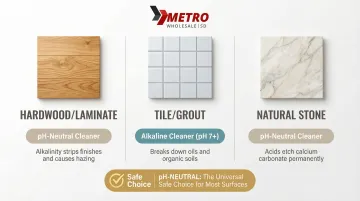
Floor cleaner is a separate purchase — different flooring types require different chemistry.
| Flooring Type | Cleaner Type | Why It Matters |
|---|---|---|
| Hardwood/Laminate | pH-neutral | High alkalinity strips finishes and causes hazing |
| Tile/Grout | Alkaline (pH > 7) | Breaks down oils and organic soils effectively |
| Natural Stone | pH-neutral | Acids react with calcium carbonate, causing permanent etching |
Check your apartment's flooring before purchasing. A pH-neutral cleaner is the safest universal choice for mixed flooring, preventing accidental damage to wood finishes while still cleaning tile effectively.
Must-Have Cleaning Tools and Equipment
The right tools determine how effectively your cleaning products actually work. Quality equipment cuts cleaning time and gets better results than making do with whatever's on hand.
Floor Care Tools
A vacuum cleaner is the single highest-impact tool in any apartment. It removes dust, pet hair, and debris from carpeted and hard-floor spaces. Indoor air pollutants average 2-5 times higher than outdoor levels, and regular vacuuming prevents these particles from recirculating.
Upright vs. stick vacuums: Stick models work better in smaller apartments with limited storage. Look for HEPA filtration — these filters capture 99.97% of particles as small as 0.3 microns, including fine dust and allergens.
Pair your vacuum with a mop and bucket for hard floors:
- Traditional string mops work better for large tile areas
- Flat microfiber mops excel at quick daily cleanups in smaller spaces
- A mop without a wringer bucket limits how clean floors actually get — dirty water just spreads around
Surface Cleaning Tools
Microfiber cloths are non-negotiable. They work on glass, stainless steel, countertops, and appliances without scratching. Research shows microfiber removes 99% of bacteria compared to 30% for cotton alternatives.
The difference comes from structure: split fibers create massive surface area that traps particles rather than pushing them around.
Microfiber cloths are reusable, making them more cost-effective than paper towels over time. Look for 12-count multi-packs with different colors for different rooms — it's an easy way to prevent cross-contamination between the bathroom and kitchen.
Scrub brushes and sponges serve different purposes:
- Stiff-bristle scrub brush for grout, tile, and tough kitchen residue
- Non-scratch sponge for everyday dish and surface scrubbing
- Note: Abrasive scrubbers permanently damage certain countertop finishes
Protective and Utility Accessories
Rubber or latex gloves protect hands from harsh chemicals and bacteria — and they make longer cleaning sessions noticeably more comfortable. Look for flock-lined gloves with extended cuffs, which keep cleaning solution from dripping onto your wrists.
Add a duster (extendable if possible) for ceiling fans, light fixtures, and baseboards. An extendable model prevents the need for step stools in most apartments.
A caddy or tote organizes supplies and lets you carry everything room-to-room efficiently, saving multiple trips back to the cabinet.
Nice-to-Have Supplies Worth Adding to Your Cart
These items aren't urgent on day one but make real differences over time. Add them once your core kit is established.
Four additions worth picking up as your cleaning routine takes shape:
- Disinfectant wipes — quick cleanups on doorknobs, light switches, and remote controls without spraying. Good for daily spot maintenance, but not a substitute for deeper cleaning.
- Baking soda — deodorizes drains and scrubs stubborn bathroom stains without harsh chemicals.
- White vinegar — dissolves mineral deposits and hard water stains on faucets and fixtures.
- Toilet bowl cleaner tablets — drop one in the tank for passive maintenance between deep cleans. A practical time-saver if you're juggling a packed schedule.
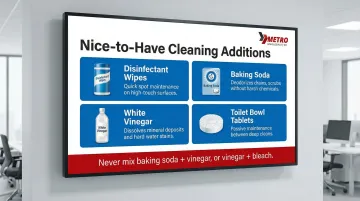
One important safety note: never mix baking soda and vinegar together — the reaction neutralizes both and leaves you with ineffective salt water. More seriously, never combine vinegar with bleach — that combination creates toxic chlorine gas that can cause serious respiratory injury.
How to Stock Your New Apartment's Cleaning Kit Without Overspending
Start with the "core eight" before anything else:
- All-purpose cleaner
- Bathroom disinfectant
- Kitchen degreaser
- Glass cleaner
- Dish soap
- Floor cleaner
- Microfiber cloths
- Vacuum
Everything else can be added gradually. This keeps move-in costs manageable and prevents duplicate purchases.
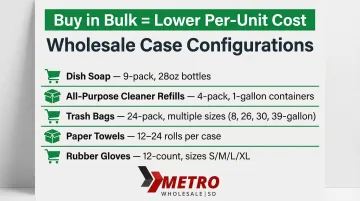
Buying in bulk lowers per-unit costs on high-consumption items. Trash bags, gloves, paper towels, dish soap, and all-purpose cleaner refills need regular restocking — these are where wholesale purchasing makes the biggest impact.
For example, wholesale suppliers like Metro Wholesale carry cleaning essentials in case quantities that can lower costs compared to buying single units at retail. Their inventory includes cleaning solutions from brands like Awesome (31 products across all major categories) and Cloralen, plus microfiber cloths in 12-packs, rubber gloves in multiple sizes, and paper towels in bulk cases.
Wholesale case configurations include:
- Dish soap: 9-pack cases with 28oz bottles
- All-purpose cleaner refills: 4-pack cases with 1-gallon containers
- Trash bags: 24-pack cases in multiple sizes (8-gallon, 26-gallon, 30-gallon, 39-gallon)
- Paper towels: Cases of 12-24 rolls depending on brand
- Rubber gloves: 12-count cases in Small, Medium, Large, and Extra Large
That said, one-time tools like mops and vacuums don't benefit from bulk buying. Purchase a quality version of each once and move on.
Keep a short restock list on your fridge or in a notes app so supplies never run out mid-clean. Think of your cleaning kit as an ongoing investment in your space, not a one-time purchase.
For quality wholesale cleaning supply options that fit household budgets, reach out to Metro Wholesale at info@metrowholesalesd.com or call +1 619-423-5600.
Frequently Asked Questions
What cleaning supplies should I buy first for a new apartment?
Start with all-purpose cleaner, bathroom disinfectant, dish soap, microfiber cloths, and a vacuum. These five items cover the most ground before adding any specialized products.
How many cleaning products do I really need for a small apartment?
Four to five core solutions combined with three to four tools are sufficient for most one- or two-bedroom apartments. More products don't mean a cleaner home — they just take up cabinet space and create decision fatigue.
Is it worth buying cleaning supplies in bulk for an apartment?
Yes, for consumables like trash bags, gloves, dish soap, and all-purpose cleaner refills that you use regularly. Bulk buying reduces per-unit costs significantly. One-time tools like mops and vacuums don't require bulk purchasing — buy quality versions once.
Do I need separate cleaners for the kitchen and bathroom?
While all-purpose cleaners handle light surface cleaning in both rooms, dedicated bathroom disinfectant and kitchen degreaser are recommended. Each room has distinct soil types — bacteria and soap scum in bathrooms versus grease and food residue in kitchens — that require different chemical formulations for effective cleaning.
What's the difference between a disinfectant and an all-purpose cleaner?
All-purpose cleaners remove visible dirt and grime; disinfectants kill bacteria and viruses using EPA-registered antimicrobial chemicals. Some products combine both functions. For high-risk areas like toilets and raw food prep surfaces, choose an EPA-registered disinfectant and follow the contact time instructions on the label.
How do I store cleaning supplies safely in a small apartment?
Keep products in their original labeled containers and store them in a cool, dry place like under the sink — use a childproof latch if children are present. Never mix chemicals, particularly bleach with ammonia or vinegar, as this creates toxic gases. Always ventilate the space when using strong cleaning agents.